Mobarakeh Steel, a teachable model of strategic resistance
Deprecated: preg_split(): Passing null to parameter #3 ($limit) of type int is deprecated in /home/madanname/public_html/wp-content/themes/jannah/framework/functions/post-functions.php on line 800

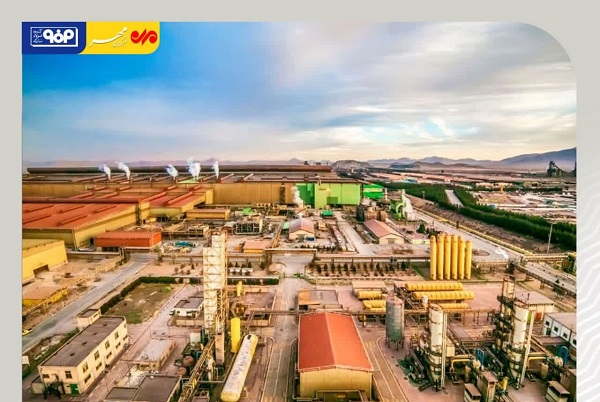
According to the news website ” Madan Nameh “, in the industrial geography of Iran, the concept of “resilience” is being redefined these days not in conference halls and academic management books, but in the field, amidst smoke and fire and among the collapsed rubble. When more than 50 projectiles and heavy bombs landed on the massive Mobarakeh Steel Complex in two consecutive and cowardly raids, the planners of this operation had set the calendars in their war rooms to announce the end of the Iranian economy. They thought that with this blow, they had stopped the pulse of the national economy forever; unaware that this vast complex is not just a vulnerable economic enterprise, but the lifeblood of the Middle East and North Africa industry and the living identity card of a nation’s self-reliance.
Today, as the dust of the rubble settles, the incessant beat of hammers, the roar of furnaces, and the dazzling sparks of welding at the heart of this supercomplex communicate an undeniable truth to the world: the recent invasion not only did not bend the stature of this steel fortress, but it also strengthened the backbone of the country’s industry so much that the dream of crippling it has been forever added to the archives of the enemies.
Dissecting an industrial terrorism: Why Mobarakeh Steel?
To understand the depth of this “ industrial terrorism ,” one must go beyond the surface level of destruction and look at the geostrategic position of this complex in the national supply chain. In the modern economy, steel is the leaven and the definitive prerequisite for any development. From the production and assembly lines of automobile factories and home appliance factories to mega-infrastructure projects, water transmission networks, petrochemical industries and refineries, all are indebted to and unquestionably dependent on the products of this complex.
The strategy behind these blind but deadly attacks was to create a “domino effect.” The attackers knew very well that if the beating heart of steel sheet production in Iran were to fail, downstream industries would soon be bogged down in a deadlock over the supply of raw materials, ancillary factories would close one after another, unemployment would soar, and the economic crisis would turn into a full-fledged social-security crisis. However, the occurrence of this crisis revealed a reality that doubled its importance in the eyes of policymakers and the public: Iran’s comprehensive security is organically linked to the continued existence of Mobarakeh Steel. This threat inadvertently became a stage for demonstrating the inextricable link between national will and the power of industrialists, and targeting the economic strength only resulted in the concrete manifestation of the steely will of domestic experts.
The classic doctrine of modern warfare and crisis management dictates that after the destruction of a major strategic infrastructure, the factory must be immediately evacuated, production must be completely stopped, and damage assessment and reconstruction must begin after the tensions have completely subsided.
Observers who are present in this complex today witness a scene that is rarely taught in engineering academies in the West or East; while parts of the factory still bear the heat and scorching heat of the explosion, Iranian engineers, technicians, and workers are working with determination and without causing even a single day of complete interruption in the production cycle, repairing the damaged arteries. Work shifts have given way to operational posts. This epic stand is not merely a technical achievement; it is a tangible manifestation of the victory of human will and indigenous knowledge over the war machine and destructive imported weapons. In this unequal confrontation, iron and concrete collapsed, but the spirit that governs the organization remained stronger than ever.
Resilient Architecture: Relying on Three Fundamental Pillars
This stunning level of resistance, beyond the physical strength of the metal structures, is rooted in profound managerial intelligence at the borderline zero point of the crisis; intelligence based on three pillars that formed the main structure of this victory:
First; Technological independence and the Jihad of localization : An examination of the remnants of the attacks shows that the precise targeting of the projectiles was aimed at parts and components that, in their illusion, were on the blacklist of international sanctions. The attackers attacked with the illusion that it was impossible to replace these advanced Western or Eastern components and that the devices would remain paralyzed forever. But what was not included in their calculations was the “deposition of technical knowledge” among domestic specialists during the long years of sanctions. The parts that were targeted had previously been localized by domestic engineers, and the reconstruction process immediately evolved into a knowledge-based jihad.
Second; Agile and intelligent supply chain management: In the early hours after the attack, the complex’s crisis management system was at the highest level of readiness. By immediately activating contingency plans and replacing logistics and production routes, they prevented the shock of a temporary reduction in production from spreading to a crisis of steel sheet shortage in the country’s downstream industries. This agile management saved the arteries of the economy from the risk of clotting.
Third; The determination of human capital (guardians of the industry): Equipment, without willing people, is just a pile of cold metal. What saved Mobarakeh Steel were the workers who considered the factory their home. The crisis showed that security impulses do not weaken the cohesion and morale of workers and engineers, but rather, they temper them like steel in a furnace. Seeing eyes that are red from lack of sleep but hands that are still welding new structures with strength, proved that the human capital of this complex is its most valuable asset.
The economic defensive shield; a barrier against rampant inflation
The triumphant passage of this historic milestone revealed another aspect of Mobarakeh Steel’s function: its role as a “macroeconomic defensive shield.” In a world where steel prices are a function of severe global fluctuations and geopolitical shocks, if production at this complex were to cease, Iran would be forced to immediately import at astronomical prices to meet the needs of the domestic market. The result of such an event was a massive outflow of foreign exchange from the country, a sudden increase in the final prices of cars, housing, and household appliances, and ultimately, the imposition of a tsunami of unbridled inflation on the daily livelihoods of the people.
But smart response, rapid reconstruction, and supply management in this complex prevented this disaster from happening. In this campaign, Mobarakeh Steel showed that it does not only play the role of an industrial producer, but also an anchor of market stability and a protector of citizens’ livelihoods against shocks imposed by foreigners.
The Birth of the “Secure Industry” Doctrine and Defense Modernization
No crisis is without achievement, and the strategic lesson learned from this event highlighted the need for a change in approach to the country’s macro-passive defense. What is currently underway at Mobarakeh Steel under the name of reconstruction is by no means a return to zero and a simple, traditional repair; rather, this complex is implementing a “defense modernization” at the highest level of global security standards.
Engineers are redesigning the structures, decentralizing sensitive points, strengthening shields, and equipping the factory with new systems and structures that will make it impenetrable against any threat, sabotage, or possible military attacks in the future. Every piece that is repaired today is equipped with more sophisticated layers of protection. Today, this complex is not only a symbol of resistance, but has also become the standard-bearer, pioneer, and practical laboratory of the “safe industry” movement in Iran; an achievement that inadvertently led the enemies to sign the order to build a more modern and robust complex.
Vision: The Iron Phoenix Reborn from the Ashes
The fundamental question now being asked in industrial circles is: Will Mobarakeh Steel be the same after this painful but glorious transformation? Absolutely not. Just as raw iron ore must be burned in a furnace at the most brutal temperatures to be transformed into the most resistant alloys, so too has this complex found a new identity and new dimensions of sustainability in the furnace of these war attacks.
The history of the world’s industrial development has always been pregnant with great devastation, from the destroyed factories of World War II to contemporary crises. But what has taken place in the heart of Iran in recent months is a living manifesto of “willfulness” in the age of asymmetric threats.
The enemies who, by calculating the volume of their attacks, expected the Mobarakeh Steel to stop, are now witnessing the return of this complex to the path of production and forward movement; a complex that, relying on the internal power, knowledge and will of the employees, continues its development path more firmly than in the past. Now, we can firmly claim that this bitter event is the golden turning point that not only pushed Iran’s mother industries towards unique new defense models, but also, in the not-so-distant future, will become an unparalleled and teachable model of “strategic resistance” for all independent countries of the world. The wheels of Iran’s progress turn with the blood of its children’s hearts, knowledge and strong arms; not with the will and bombs of foreigners.
Deprecated: preg_split(): Passing null to parameter #3 ($limit) of type int is deprecated in /home/madanname/public_html/wp-content/themes/jannah/framework/functions/post-functions.php on line 800