Industry, mining, and media: three aspects of overcoming the crisis and building the future
Deprecated: preg_split(): Passing null to parameter #3 ($limit) of type int is deprecated in /home/madanname/public_html/wp-content/themes/jannah/framework/functions/post-functions.php on line 800


If Industry and Mining Day is to be summed up in just a few congratulatory messages, a few celebratory images, and a few repetitive sentences, we have missed a great opportunity. More than just an occasion to celebrate, this day should be an opportunity to pause, review, diagnose, and chart the path to the future. An opportunity to honestly ask ourselves where Iran’s industry and mining stand, what difficult path it has traversed, and what decisions it needs to make to play a more serious role in the future of the country’s economy.
Iran’s industry and mining have not had easy days in the past year. War, sanctions, energy imbalances, inflation, financial restrictions, export difficulties, instability in some decisions, and continuous pressures on the production chain, each of which alone could have stopped part of the country’s production capacity. However, the important fact is that the production chain did not stop moving. Factories, mines, transportation lines, processing units, workshops, and support complexes, despite all the difficulties, kept the production cycle alive. This resilience is not a low-value asset, but rather one of the most important assets of the Iranian economy today, which must be recognized, strengthened, and prevented from being exhausted.
At a time when the country’s economy needs sustainable growth paths more than ever, mining and mineral industries can be one of the fastest and most practical ways to increase production, create jobs, develop exports, earn foreign exchange, and reduce dependence on oil revenues. In terms of mineral reserves, geographical location, specialized human resources, and industrial experience, Iran has capacities that, if combined with sound policymaking, targeted investment, and scientific management, can play a decisive role in rebuilding the national economy.
But capacity alone does not develop. Mineral reserves without human capital, technology, infrastructure, management, and stable policymaking are only a potential possibility. One of the most important demands of industry and mining activists is stability in decision-making, rather than temporary and financial support. Sudden changes in regulations, directives, export policies, pricing, energy supply, and financial mechanisms impose heavy costs on manufacturing firms. How can a manufacturer who cannot predict decisions over a multi-month horizon plan for multi-year investments?
Therefore, Industry and Mining Day should be an excuse to make a serious demand: The country’s industry and mining need sustainable, predictable, and dialogue-based decisions. Development is not built with sudden orders, scattered directives, and a short-term view. Development is formed when policymakers, producers, investors, workers, experts, and the media each recognize their place and move in a common direction.
Meanwhile, specialized media also has a position beyond that of an external observer. Specialized media is not formed just to publish news, reflect on events, include performance reports, or repeat the official narrative of organizations. Specialized media fulfills its mission when it is both the voice of production and a demanding one, when it conveys the difficulties of economic activists to decision-makers, and when it prevents the normalization of errors, instabilities, and costly decisions through expert criticism.
Mining and industry are not properly understood in the public mind without an accurate, fair and specialized narrative. Many of the difficulties of production arise from the distance between decision-makers and the actual field of industry. Specialized media can reduce this distance, can convey the experience of enterprises, introduce investment opportunities, criticize incorrect policies, highlight real achievements and do not let the main issues of the industry get lost on the sidelines of everyday noise.
Of course, this role makes sense when the media does not become mere public relations. If the specialized media only reflects the news of organizations and companies, it loses its real role. Fair criticism is not an enemy of the industry, but rather part of serving the industry. If professional criticism is based on knowledge, fairness, and responsibility, it can help correct the course, improve the quality of decisions, and increase public trust. A powerful industry is not afraid of the demanding media, but rather uses it to better see its strengths and weaknesses.
Along with all these topics, we should not forget that the industry and mining are not only known by the names of managers and companies. Behind every ton of production, behind every export shipment, behind every processing line, and behind every development plan, there are people who are sometimes less visible: mine workers, engineers, geologists, heavy machinery drivers, safety experts, repair workers, operators, laboratory specialists, transportation workers, and all those who have maintained the production cycle in the most difficult conditions.
If we talk about the resilience of industry and mining today, we must know that this resilience, before being the product of machinery, reserves, and equipment, is the product of people who stood up, worked, and did not let production shut down. Human capital is more important than mineral capital. No reserve creates economic and social value without specialized human resources, capable managers, and hardworking workers. Maintaining, training, motivating, and providing job security for this human capital should be a priority in the country’s development policies.
Today, more than ever, Iran’s industry and mining need intelligent empathy: empathy between the government, the private sector, and the media. The government must provide a basis for sustainable activity through stability and trust. The private sector must play its role in national development with transparency, innovation, and social responsibility. The media must also be both an eye-catcher for production and a watchdog for the industry with independence, expertise, and fairness.
Supporting specialized media is not a cost, it is an investment in improving the quality of decision-making in the industry. A society that does not have a strong specialized media will also have weak specialized decision-making. Just as the industry needs energy, capital, technology, and human resources, it also needs accurate narratives, fair criticism, and professional demands.
Industry and Mining Day is a day of respect for production, but true respect for production is not achieved by just congratulating. Respect for production means listening to the voices of activists in this field, reducing instabilities, correcting incorrect decisions, supporting human resources, strengthening investment, developing technology, and accepting the role of the media in the path of development.
Despite all the difficulties, Iran’s potential remains intact. Mining and the mining industry can play a decisive role in the future of the country’s economy, provided that the right, timely, and sustainable decisions are made. Today, more than ever, it must be accepted that industry, mining, and media are three sides of a triangle, a triangle that, if properly understood and strengthened, can lead the country through crises and lead it toward a more productive, transparent, and hopeful future.
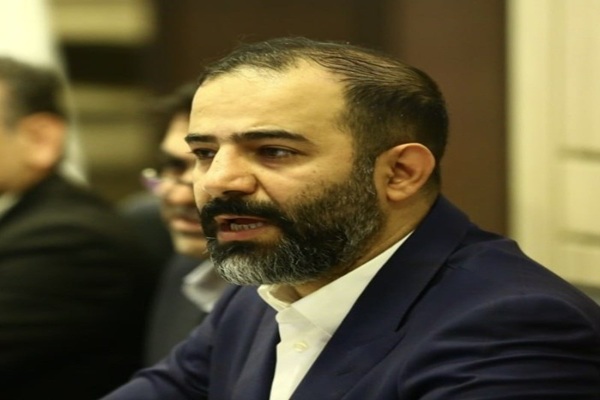
Mohammadreza Ebrahimi
Managing Director of the ” Madan Nameh ” news website
Deprecated: preg_split(): Passing null to parameter #3 ($limit) of type int is deprecated in /home/madanname/public_html/wp-content/themes/jannah/framework/functions/post-functions.php on line 800